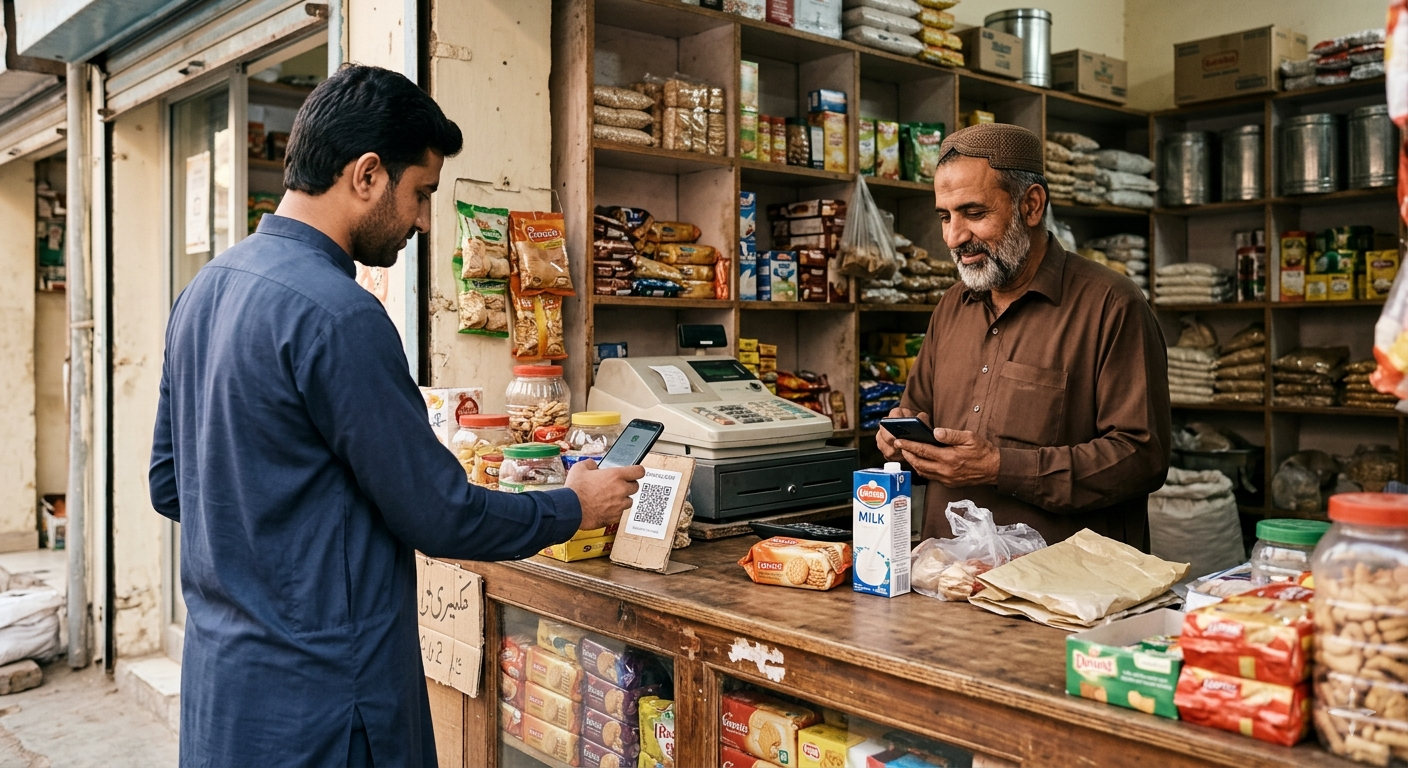
Cash is still common in small shops, but it creates friction. Lost notes, delayed payments, no records, and constant follow-ups are part of daily operations. As more customers prefer convenience, shopkeepers who rely only on cash risk losing sales.
Today, there are simple ways to collect payments from customers without cash. Even better, many of these options do not require a POS machine, expensive hardware, or technical expertise. With the right setup, any shopkeeper in Pakistan can accept digital payments, track transactions, and get paid faster.
This guide explains how shopkeepers can accept payments without cash, the best payment methods available, and how to manage everything efficiently using tools like Udhaar Book.
Why Shopkeepers Need to Accept Payments Without Cash
Customers are shifting toward digital payments for shops because they are fast, secure, and convenient. Ignoring this shift can limit business growth.
Cash handling comes with several problems:
- Risk of theft or loss
- No proper record keeping
- Difficulty tracking customer payments
- Delays in collecting pending payments
- Time wasted in manual حساب or registers
Digital payment solutions solve these issues by making payment collection faster and more transparent.
Common Ways to Collect Payments from Customers Without Cash
Shopkeepers in Pakistan have multiple options to accept digital payments without investing in costly systems.
1. Mobile Wallet Payments
Mobile wallets like EasyPaisa and JazzCash are widely used across Pakistan. Shopkeepers can receive payments directly into their wallet accounts.
Customers simply send money using a phone number or scan a QR code.
This method allows shopkeepers to:
- Receive payments instantly
- Accept payments using just a mobile phone
- Avoid the need for a POS machine
2. Bank Transfers and Raast Payments
Bank transfers are another reliable way to receive payments online in Pakistan. With the Raast payment system, transfers are instant and free in most cases.
Customers can send payments using:
- IBAN
- Mobile number linked with Raast
This makes it easier for shopkeepers to collect payments instantly without delays.
3. QR Code Payments
QR code payment systems are becoming popular for small shops. Shopkeepers display a QR code, and customers scan it to pay.
Benefits include:
- No hardware required
- Fast and contactless transactions
- Easy setup for small businesses
4. Payment Links
Shopkeepers can also send payment links to customers via WhatsApp or SMS. This is useful for remote orders or delivery businesses.
Payment links help:
- Collect payments online
- Reduce payment delays
- Simplify the payment process
How to Accept Payments Without a POS Machine
Many small business owners assume they need a card machine to accept digital payments. That is no longer true.
Shopkeepers can accept payments without a POS machine by using:
- Mobile wallet apps
- QR code systems
- Bank transfers
- Payment links
These methods require no upfront investment and allow businesses to start collecting payments immediately.
This is especially useful for kiryana stores, small retailers, and home-based businesses looking for low cost payment solutions.
Best Payment Methods for Small Shops in Pakistan
Choosing the right payment method depends on the type of customers and business model.
For walk-in customers:
- QR code payments
- Mobile wallet transfers
For regular customers or udhaar:
- Digital payment tracking tools
- Payment reminders
For delivery or online orders:
- Payment links
- Bank transfers
The best approach is to combine multiple methods to give customers flexibility.
Managing Customer Payments Efficiently
Accepting digital payments is only half the solution. The real challenge is managing and tracking those payments.
Shopkeepers often face issues like:
- Forgetting who paid and who did not
- Losing track of udhaar
- Delayed payments from regular customers
This is where a digital system becomes essential.
1. Track Payments Digitally
A proper system allows shopkeepers to:
- Record every transaction
- Track customer balances
- Maintain a digital ledger
2. Send Payment Reminders
Instead of manually calling customers, automated reminders can be sent for pending payments.
This helps:
- Recover outstanding payments faster
- Reduce awkward follow-ups
- Improve cash flow
How Udhaar Book Helps Shopkeepers Collect Payments
Udhaar Book is designed specifically for small businesses in Pakistan that want to simplify payment collection and manage customer accounts.
It goes beyond basic digital payments by offering a complete payment management system.
With Udhaar Book, shopkeepers can:
- Record all customer transactions in one place
- Track udhaar and pending payments easily
- Send payment reminders via SMS or WhatsApp
- Maintain a digital khata without manual registers
- Monitor who has paid and who has not
This makes it easier to collect payments from customers without relying on memory or paper records.
Instead of chasing payments, shopkeepers can manage everything through a single app.
Digital Payments vs Cash for Shopkeepers
Switching from cash to digital payments offers clear advantages.
Digital payments help:
- Reduce cash handling risks
- Improve payment tracking
- Increase transparency
- Speed up transactions
- Build customer trust
Cash, on the other hand, creates gaps in records and slows down business operations.
For shopkeepers who want to grow, adopting digital payment solutions is no longer optional.
How to Get Started with Digital Payments
Getting started is simple and does not require technical knowledge.
Steps to follow:
- Set up a mobile wallet account like EasyPaisa or JazzCash
- Enable Raast payments through your bank
- Generate a QR code for your shop
- Start accepting payments from customers
- Use a tool like Udhaar Book to track and manage all transactions
Within a few days, any shopkeeper can move toward a cashless system.
Start Collecting Payments the Smart Way
Every shopkeeper wants faster payments, fewer losses, and better control over their business. Digital payment methods make this possible.
Instead of relying on cash and manual records, shopkeepers can now accept payments instantly, track everything digitally, and recover pending payments without stress.
Apps like Udhaar Book make this transition even easier by combining payment tracking, udhaar management, and reminders in one place.
For shopkeepers who are tired of chasing payments or dealing with messy records, this is the simplest upgrade they can make.
Download Udhaar Book today and start collecting payments from customers the smarter, faster, and more reliable way.
FAQs
1. How can shopkeepers collect payments from customers without cash in Pakistan?
Shopkeepers can accept digital payments using mobile wallets like EasyPaisa and JazzCash, bank transfers through Raast, QR code payments, and payment links. These methods allow businesses to receive payments instantly without cash.
2. What is the best payment method for small shops?
The best method depends on the business, but a combination of QR code payments, mobile wallets, and payment tracking apps works best for most small shops.
3. Can I accept payments without a POS machine?
Yes, shopkeepers can accept payments without a POS machine by using mobile apps, QR codes, and bank transfers. These are low cost and easy to set up.
4. How do I track customer payments easily?
Using a digital tool like Udhaar Book allows shopkeepers to record transactions, track balances, and manage customer payments in one place.
5. Are digital payments safe in Pakistan?
Yes, digital payments through banks, Raast, EasyPaisa, and JazzCash are secure. They reduce the risks associated with handling cash.
6. How can I collect pending payments from customers?
Shopkeepers can send payment reminders through apps like Udhaar Book, making it easier to recover outstanding payments without manual follow-ups.
7. Which app is best for collecting payments in Pakistan?
There are several options, but Udhaar Book stands out because it not only helps collect payments but also manages udhaar, tracks transactions, and sends reminders, making it a complete solution for shopkeepers.